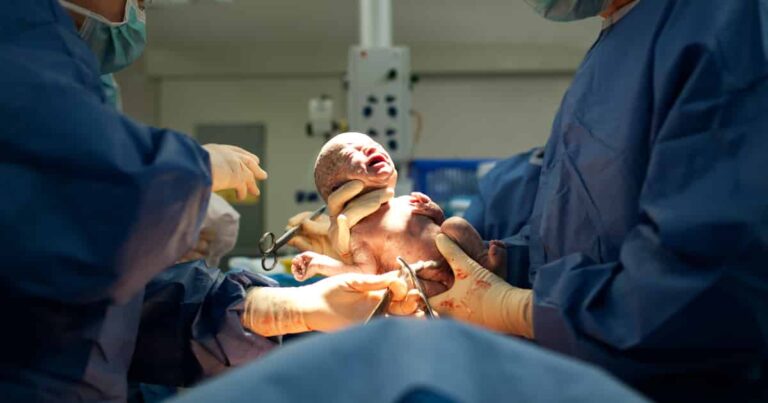
Topic: giving birth

Sarah Michelle Gellar And Freddie Prinze Jr. Release Just The Right Amount Of Information About Their Baby Boy

Sarah Michelle Gellar And Freddie Prinze Jr. Release Just The Right Amount Of Information About Their Baby Boy

A few months ago, we were so excited to learn that ’90s teen movie couple Sarah Michelle Gellar and Freddie Prinze, Jr. were expecting their second child. Because how could you not want to procreate again after giving birth to their sweet little daughter Charlotte Grace? Well, Charlotte is now a very proud big sister—and we know this because the family’s rep just announced that Sarah gave birth to a little boy! More »

Top 10 Tips To Ensure A Successful VBAC

Top 10 Tips To Ensure A Successful VBAC

Aftering spending some time talking with Dr. Jacqueline Worth and Dr. George Mussalli, it’s clear that there are a lot of factors that can influence a mother’s outcome. The doctors’ small practice in Greenwich Village not only boasts a 91% success rate for VBACS in 2011, but has also overseen over 1000 deliveries. The two doctors, and champions of VBACs, spoke with Mommyish about risks and tips parents should consider before embarking on this important birthing decision. More »

I’m So Happy I Didn’t Let My Doctor Talk Me Into Having A Second C-Section

I’m So Happy I Didn’t Let My Doctor Talk Me Into Having A Second C-Section

Leah Marshall originally wanted a vaginal birth for her first baby. But like a lot of first-time mommies, she encountered several problems during delivery that ultimately did lead to an emergency c-section. Her baby turned out to be quite large, weighing nine pounds and six ounces and positioned “sunny side up” causing her cervix to swell up instead of open. Her contractions were also very abnormal with “double peaking,” even after the pitocin arrived. Leah tells me that at the time, doctors were unaware that all of these factors were perhaps caused by her son’s size, his positioning, or a combination of both.

After a successful c-section brought her son into the world, Leah’s doctors suggested that she default c-sections on all future additions to her family. But even though vaginal birth carries some risks following an initial c-section, Leah committed to a VBAC (vaginal birth after c-section) to achieve the birth experience that she wanted. More »

Once A C-Section, Always A C-Section

Once A C-Section, Always A C-Section

So far, the common wisdom in c-section deliveries has usually been that once you commit to that major abdominal surgery, you’ll be delivering all subsequent babies that way (with exceptions, of course). Some women may be all about the elective c-section. But for those mothers who are hoping for a vaginal delivery, the quick decision by a doctor in a non-medically necessary scenario, which accounts for most American c-sections, can revoke her chances of ever having the kind of labor that she wants.

Risks are reportedly low for women who attempt vaginal delivery after a c-section. However, a very real risk has been documented, particularly a rupturing of the uterus during labor. In a first ever national look at uterine ruptures in the UK, researchers found small — yet consistent — hazards. More »

Determined Mom Remains Upside Down For 75 Days — In Labor — To Give Preemies A Shot At Life

Determined Mom Remains Upside Down For 75 Days -- In Labor -- To Give Preemies A Shot At Life

In what appears to be a new documented trend of superhero mothers remaining in uncomfortable positions to save their unborn babies, a Polish mommy successfully saved two out of three. Joanna Krzysztonek began to go into labor with her triplets, and after one was born prematurely and died, she was determined to save the others. Even if it meant staying in labor for 75 days — nearly upside down. More »

Abortion Is Safer In The United States Than Giving Birth

Abortion Is Safer In The United States Than Giving Birth

Not too long ago, I asked the question “Abortions In The US Are Safer Than Ever, So Why Isn’t Childbirth?” This was following word that telemedicine abortions were now safe and legal, allowing women to use the drug RU-486 to terminate their pregnancies and then teleconference with a doctor for counseling. Yet, considering all the risks that birthing women face in our western world, from unnecessary c-section complications to delivering babies too early, I wondered  if it was possible to have this pronounced a gap in women’s reproductive care. Newsflash to those just tuning in but the United States ranked in at only 39th in maternal mortality rate in 2010 – and c-sections are contributing to that mortality rate.

So if we have the science to allow women to abort their pregnancies without a doctor’s direct supervision, then why aren’t women birthing more safely with less complications? A new study in Reuters confirms my suspicions as more than mere musings however, declaring that abortion actually is safer than childbirth in the United States — and that’s clearly a problem for women everywhere. More »

The NY Times Thinks Women Aren’t Having Babies Because Of Scary TV Births

The NY Times Thinks Women Aren't Having Babies Because Of Scary TV Births

In case you didn’t know, the fertility rate in the United States is down. People aren’t having large families anymore, and in some cases, not having kids at all. Single, childless women are on the rise and a whopping one in five women not only doesn’t have kids, she doesn’t want them. Childless by choice is on the upswing as an increasing number of women (and men) astound convention by declaring they don’t want kids.
Factors to consider are perhaps the continual progress of women in the workplace, the recession in which even starting a family seems like a daunting task, and the high unemployment rate. Or, you can be like The New York Times which claims women aren’t having kids because of the all the scary, graphic births on television. More »

UK Says Every Woman Has A Right To An Elective C-Section

UK Says Every Woman Has A Right To An Elective C-Section

It used to be that in the United Kingdom, expectant mothers were only given c-sections if they were medically necessary. But our friends over the pond will soon be publishing some new health guidelines which detail updated policies on the procedure. The UK’s publically-funded healthcare system will make c-sections available to all women — even those capable of giving birth naturally. More »

STFU Parents: Don’t Brag About Your Placenta On Facebook

STFU Parents: Don't Brag About Your Placenta On Facebook

Since Halloween is just around the corner, I’ve decided to devote this week’s column to one of the most talked about – and by far the bloodiest – subjects featured on STFU, Parents: placentas! When I first started the blog back in March of 2009, I was as clueless about the tree of life as your average frat boy, but over the years I’ve come to learn that placentas, which technically qualify as medical waste, can be dealt with in myriad ways.
More »